
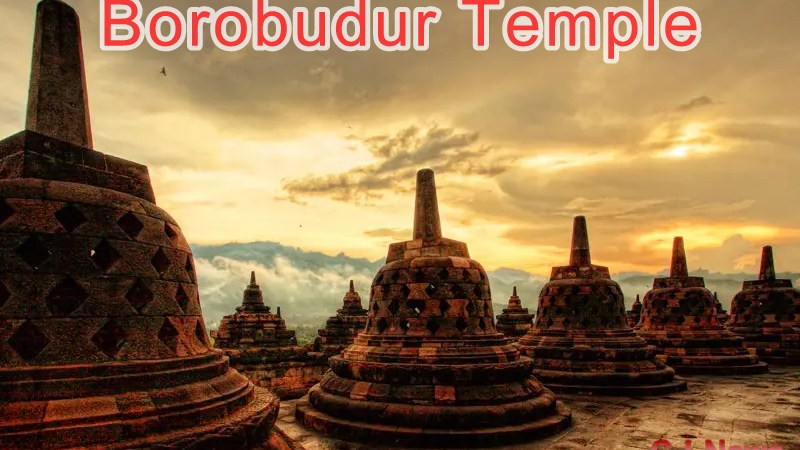
The name Borobudur Temple is certainly familiar to you. This temple is said to be the largest Buddhist temple complex in Indonesia, even the world’s largest. UNESCO designated it as a world heritage site in 1991. Apart from being a world cultural heritage, Borobudur Temple is also one of the tourist attractions that attracts a lot of attention from world tourists.
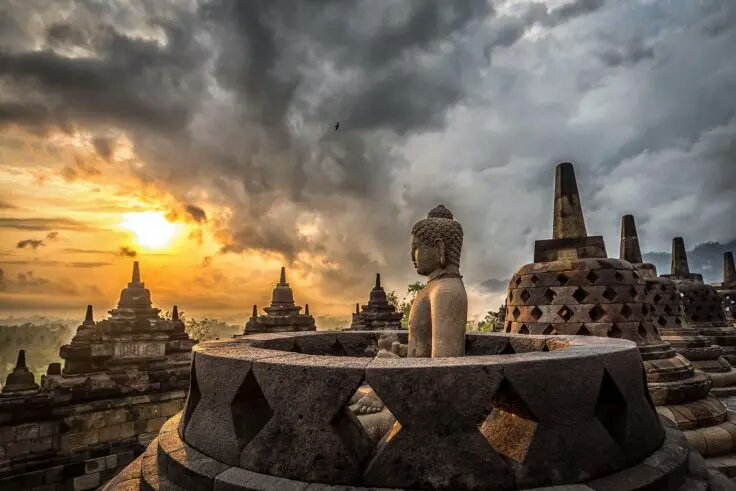
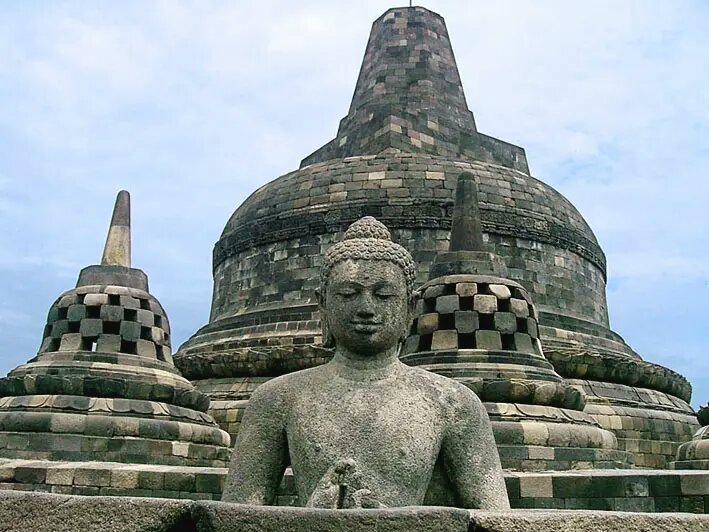
This tourist spot in Central Java, Indonesia has an area of 123 x 123 square meters and consists of 10 levels. The building is composed of volcanic beams that form 504 statues, 72 stupas and a large main stupa at the top. Uniquely, these blocks are arranged without using adhesive or cement, this complex looks like a giant lego arrangement.
The walls of Borobudur Temple are decorated with about 1,460 relief panels with a length of 2 meters each. These relief panels tell about the life stage of the Buddha. The relief at the bottom of the temple is called “Kamadathu” which tells about the bad behavior of humans who are filled with worldly lust and make them go to hell. The relief in the middle is called “Rapadathu”, it tells the story of humans who are free from the lusts of the world, while the top relief is “Arupadhatu”. This relief represents the highest level of attainment at which the gods reside.
Apart from the three reliefs, there is actually a buried relief panel at the bottom of the temple. According to historians, the buried relief is named “Karmawibhangga”. This is a relief that tells about the lowest level of humans. This relief describes the bad behavior of humans who follow their passions such as killing, gossiping and rape. There is even a picture of a husband and wife relationship. The burial of the relief panels has two reasons, namely because the reliefs are considered impolite and because of the strengthening efforts to keep the temple upright.
Borobudur Temple is said to be one of the greatest human masterpieces in history. The arrangement of volcanic beams and relief sculptures is a work of art that is unsurpassed in value. This tourist spot is also evidence of the advancement of ancient human civilization in the fields of architecture, technology and literary arts.
In this complex there are two museums, namely the Samudera Raksa Museum and the Karmawibhangga Museum. The Samudera Raksa Museum contains various collections and information about the history of Asian – African trade in the past, while the Karmawibhangga Museum contains information about the construction of Borobudur Temple.
Not only the temple building attracts attention, but also the natural scenery around it. To the south of the temple is Manoreh Hill which, if seen, resembles a person in a sleeping position. Apart from Manoreh Hill, there are still Mount Sumbing, Mount Sindoro, Mount Merbabu, and Mount Merapi that surround this magnificent building.
History of Borobudur Temple
Borobudur Temple is estimated to have been built during the Syailendra Dynasty around the 9th century under the reign of King Samaratungga. The architect of the temple complex was named Gunadharma, who succeeded in designing this extraordinary building even though he was unfamiliar with computer systems and other advanced technology.
The construction of the largest temple complex could be completed around 50-70 years later. The name Borobudur comes from the Sanskrit word ‘Vihara Buddha Uhr’ which means Buddhist Monastery on the Hill.
At that time, Borobudur Temple became the center of the largest religious activities. Until the entry of Islamic influence in the 15th century. This temple began to be abandoned by people who converted to Islam. Borobudur was increasingly forgotten during the eruption of Mount Merapi, which buried volcanic ash.
In 1814, Sir Thomas Stamford Raffles revealed the existence of the Borobudur Temple after receiving information regarding a large building buried in volcanic ash. Not only buried in volcanic ash, the condition of the temple when it was found was also filled with shrubs.
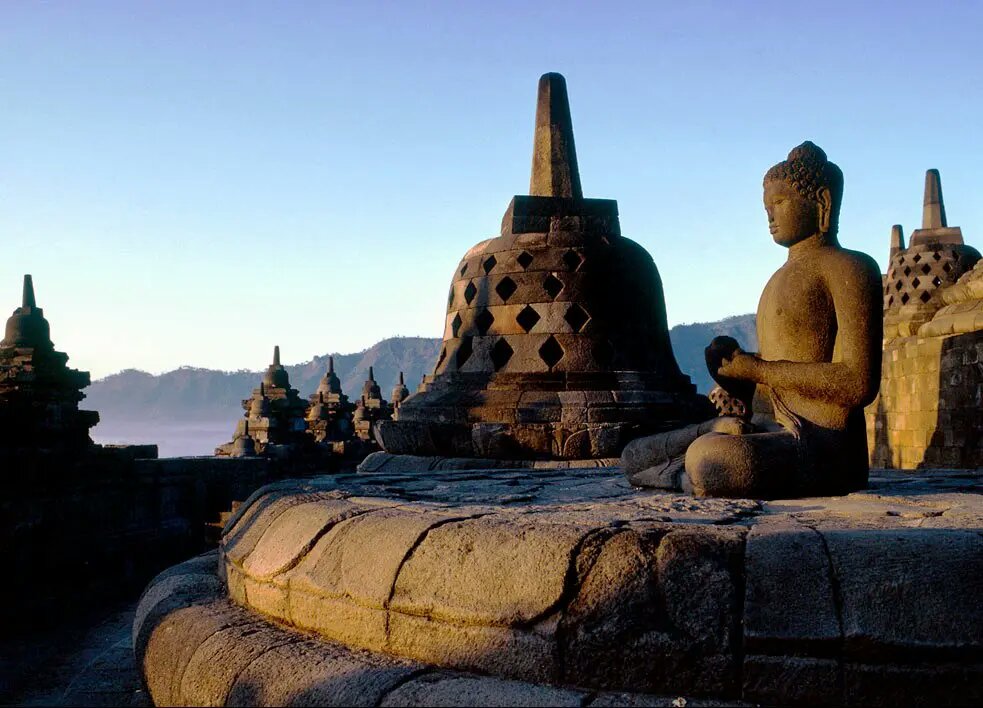
Since it was rediscovered, restoration and reconstruction efforts have been made to the temple, starting from the British colonial era to the Dutch until Indonesia became independent. With the help of UNESCO and cultural historians from around the world, Indonesia continues to strive to improve the condition of Borobudur Temple. After more than ten centuries of being neglected and neglected, this temple complex still stands firmly to this day.
What can be done at Borobudur Temple?
There are tons of things you can do while in the largest Buddhist temple complex in the world, among them
Studying literary arts and culture
If you like literary arts and culture, being at Borobudur Temple will certainly be a very interesting experience. You can read and observe the relief panels depicted on the temple walls.
To be able to read this relief story in sequence, you have to walk around the temple in a clockwise direction, from left to right. Start at the eastern door on the lowest level and walk around until you return to the original door then take the stairs to the next level. Do this over and over again to the top level to get a complete, sequential story. Are you having trouble reading the story in relief? No need to be confused because there are guide services ready to help you.
Photo hunting
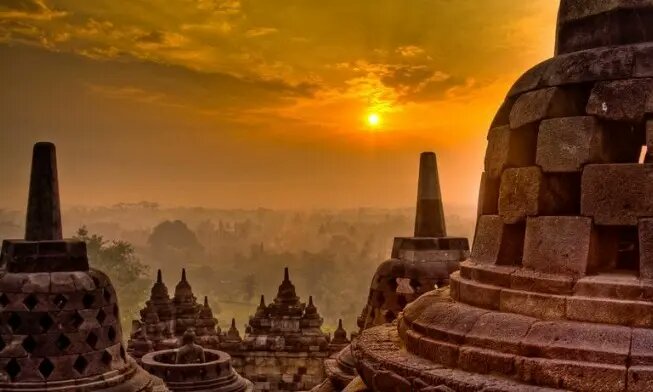
This tourist spot offers many interesting photo objects for you, photography enthusiasts. Try to get around this temple complex and find the right angle to take pictures. Borobudur Temple is also known to have beautiful sunrise and sunset views. Come at the right moment, prepare your camera and have a good time capturing the beautiful scenery.
Hunting for souvenirs
It feels incomplete if you visit a tourist spot without buying the typical souvenir. Not far from the Borobudur Temple complex, there are rows of souvenir stalls. You can buy various items from hats, t-shirts, bags, key chains to miniature temples. The price offered varies, use your ability to bid as best you can.
Getting around the temple complex
At the Borobudur Temple complex, there is a large green courtyard that you can explore. Apart from walking, you can rent a bicycle to get around this tourist spot. Do you bring small children? Try the bunny train that kids are sure to love. If you want to try a different experience, why not try riding a horse cart to get around?
What else is interesting about Borobudur Temple?

Borobudur Temple is one of the most influential places of worship for Buddhists in the world. Every year, this temple complex becomes the center of Vesak celebration and is visited by Buddhists from various countries such as Thailand, Cambodia, China and Tibet. Vesak day is celebrated during the full moon in May or commonly known as Purnama Siddhi.
The highlight of this Vesak celebration invites many tourists, both domestic and foreign. At that time, hundreds of lanterns were released into the sky along with the best wishes for the next year.
Opening hours and entrance fee for Borobudur Temple
Opening hours
Every day: 06:00 – 17:00
Price of admission
Adult 15 USD
Children 8 USD
Borobudur Temple is located on Jalan Badrawati, Magelang, Central Java, Indonesia.
The most practical way, of course, is to use a private car or use the services of a travel agent. If you choose public transportation, there are many buses heading to Borobudur Temple that you can find at Giwangan Terminal, Yogyakarta.
#Ibnu_

 Cakrawala Indo News